
Designed for unknown condition
Reduces the elevated risk from often damaged or unclearly classified used batteries.
Application area
When collecting and sorting used batteries, the actual condition of individual cells is often unknown — a particularly high-risk environment for thermal runaway.
Starting point
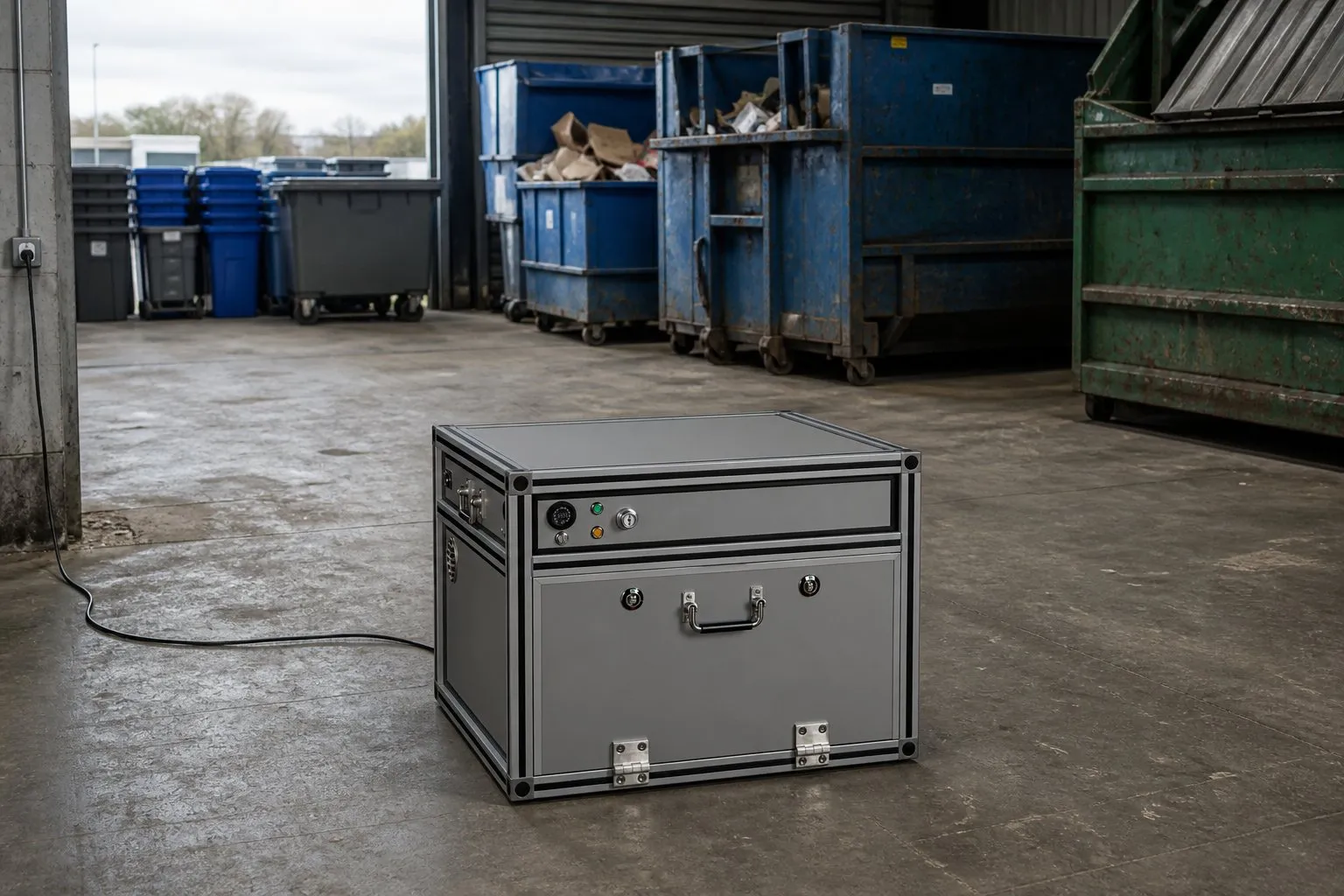
Instead of open collection bins, an enclosed, monitored space makes it possible to safely store conspicuous or damaged batteries temporarily before they are processed further.
In collection and sorting, the condition of the batteries is not just unknown. It is expected to be poor. What arrives has been discarded, is defective, mechanically damaged, deeply discharged or swollen. Otherwise it would not be there.
Deliveries are mixed: different cell chemistries, formats and manufacturers, often with no marking and frequently in open collection containers. Checking each one is not feasible at these volumes, and damaged cells are not always obvious at once.
Then the surroundings: sorting plants, conveyors, presses and large amounts of combustible material. Between intake and onward processing there is always intermediate storage — and that is where most incidents start.
Discuss your use caseLocations
How it works
Batteries with visible damage or an unclear condition are taken out of the stock before they go into bulk storage.
Instead of an open collection bin, the box offers a closed, monitored place for individual risk cases.
Temperature sensors continuously watch the stored batteries for signs of a critical state.
Only after an unremarkable check do the batteries go on into the regular sorting and recycling chain.
Benefits
Reduces the elevated risk from often damaged or unclearly classified used batteries.
Replaces open collection bins with an enclosed, monitored storage space for individual cases.
Reduces risks for staff in intake and sorting logistics.
Contributes to traceable, careful handling of used batteries.
In detail
| Typical situation | Risk without protection | With the RUK Li-Ion Safety Box |
|---|---|---|
| Collection of used and damaged batteries of unknown condition | Damaged cells carry an increased risk of thermal runaway | Separate, monitored storage of conspicuous individual batteries |
| Open collection bins in sorting areas | A single defect can spread to the entire collected stock | Enclosed system limits the spread to individual batteries |
| High throughput of third-party devices of unclear origin | The condition of batteries is often unknown on arrival | Safe testing and interim storage point before further processing |
| Employees in direct contact with used batteries | Increased risk during manual sorting | Reduced risk through a defined safety zone |
| Large amounts of e-waste arriving from different sources | Single damaged cells are hard to spot in big collected batches | A separate check place for conspicuous individual batteries before they go into collection containers |
| Legal duties of care when handling waste batteries | A duty to account to authorities and clients if there is an incident | Traceable, documentable handling of critical individual cases |
More application areas
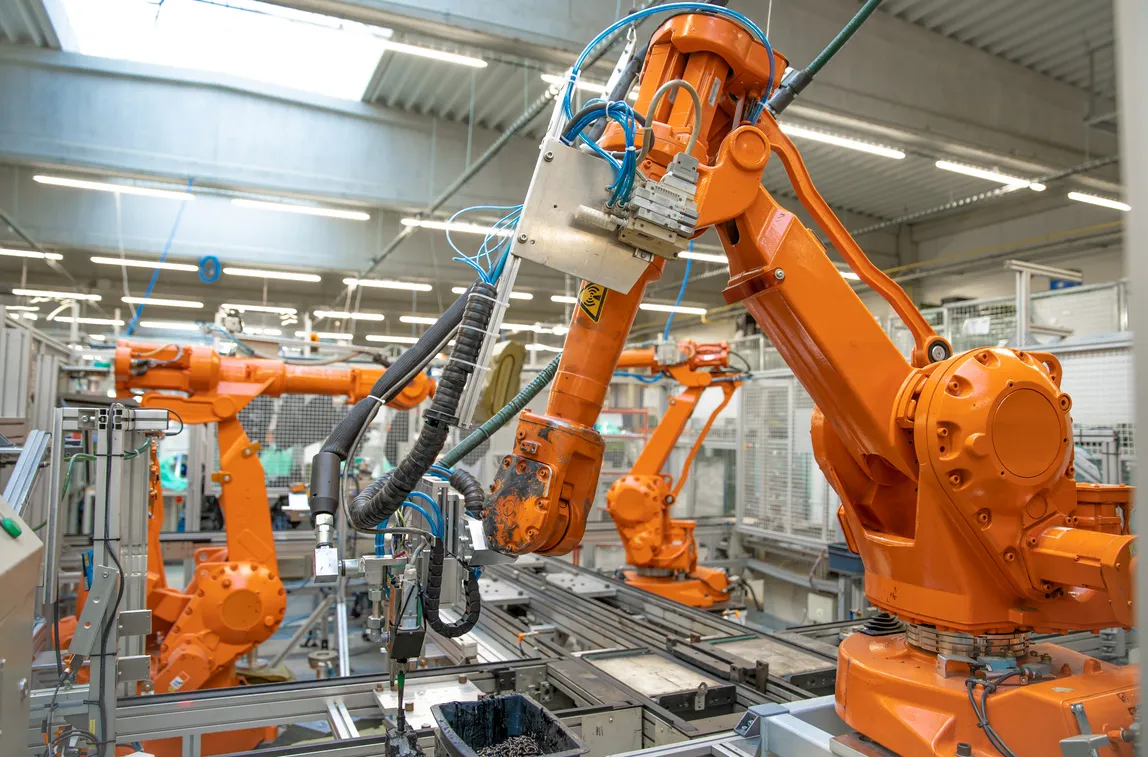
Protection in manufacturing, assembly and technical areas with heavy use of lithium batteries.
View details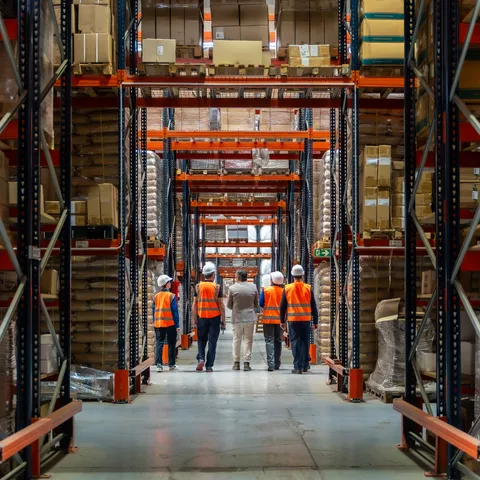
Safe charging and storage in the warehouse, in shipping and in in-house logistics.
View details
Reliable protection in public authorities, schools, universities and other public buildings.
View detailsWe'll advise you on installation location, capacities and integrating the Li-Ion Safety Box into your operation.