


Fits strict safety standards
Supports the high safety requirements of airport operations.
Application area
Airport operations are subject to particularly strict safety requirements — including how lithium batteries in ground equipment and gear are handled outside actual flight operations.
Starting point
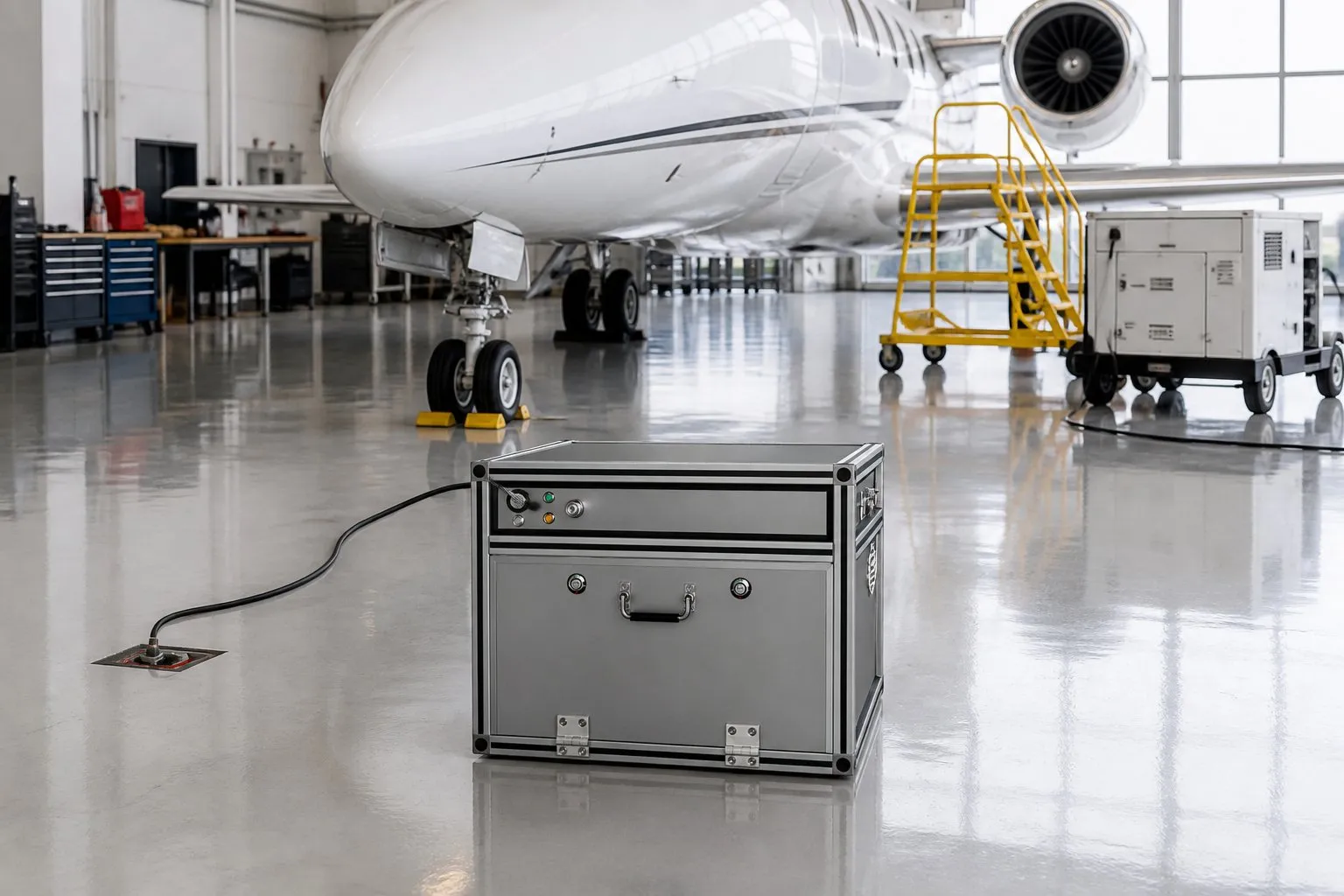
Radios, scanners and mobile ground equipment are charged around the clock. A clearly defined, documentable process reduces risk in safety-critical infrastructure.
At an airport, everything that directly touches flight operations is regulated and documented. Alongside that, ground operations run around the clock: handheld radios, scanners, handling tablets, mobile ground equipment, cordless tools in maintenance and the hangar.
These batteries are charged continuously across shifts, usually in technical and side rooms of the operations buildings. A single, documentable process for that is often not in place yet.
What makes an incident expensive here is not the property damage. It is closures, evacuations and delays in operations that carry on through the rest of the day.
Discuss your use caseLocations
How it works
The box is placed in technical, maintenance or equipment areas of ground operations, apart from flight operations themselves.
Radios, scanners and accessory batteries for tugs and ground equipment are charged in one place and in a traceable way.
Automatic monitoring runs continuously, also in off-peak hours with fewer people present.
A clearly defined charging process supports the high documentation and safety requirements of airport operations.
Benefits
Supports the high safety requirements of airport operations.
Reduces risks from batteries in ground equipment and gear outside flight operations.
Creates a clearly defined, traceable charging process.
Automatic monitoring even during off-peak hours with lower staff presence.
In detail
| Typical situation | Risk without protection | With the RUK Li-Ion Safety Box |
|---|---|---|
| Battery-powered ground equipment in the airport environment | Safety-critical infrastructure is located in the immediate vicinity | Clearly delimited, controlled charging area |
| High safety and documentation requirements | Battery handling is often not uniformly regulated | Defined, traceable charging process |
| Maintenance areas with many spare batteries | Confusing storage makes control more difficult | Central, monitored storage location |
| Round-the-clock operation | Incidents during off-peak hours are easily missed | Automatic response regardless of staff on site |
| Baggage and cargo areas, with extra attention on lithium batteries | A particularly sensitive area, with strict rules for handling batteries | A documentable, controlled charging process outside actual baggage handling |
| Several ground handlers use the same charging areas | Safety standards differ between service providers | One shared safety standard at the charging place, binding for everyone involved |
More application areas

Protection in manufacturing, assembly and technical areas with heavy use of lithium batteries.
View details
Safe charging and storage in the warehouse, in shipping and in in-house logistics.
View details
Reliable protection in public authorities, schools, universities and other public buildings.
View detailsWe'll advise you on installation location, capacities and integrating the Li-Ion Safety Box into your operation.